Designed and built by Wisewood Energy, the district heating system is expected to replace more than 150,000 gallons of propane a year at the resort’s West Village base area, reducing greenhouse gas emissions and supporting the forest stewardship economy in Deschutes County, Oregon.
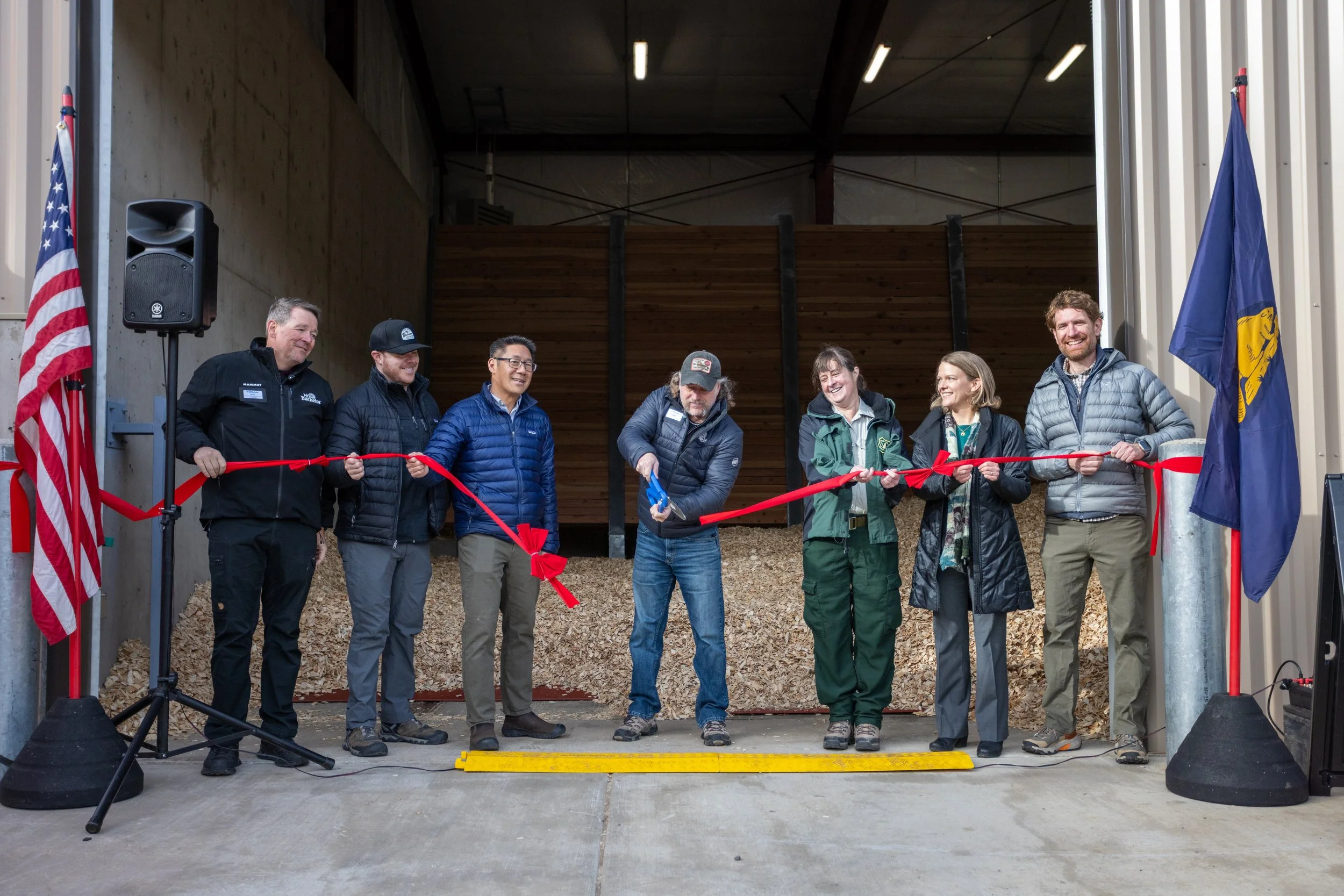
Project partners cut the ribbon on the Wood Fuel Energy Facility at Mt. Bachelor’s West Village base area on Nov. 12, 2026. From left, John Merriman, CEO, POWDR; Gavin Coble, Office of Sen. Jeff Merkley; Phil Chang, Commissioner, Deschutes County; Ryan Gage, Director of Base Operations, Mt. Bachelor; Holly Jewkes, Forest Supervisor, Deschutes National Forest; Janine Benner, Director, Oregon Department of Energy; and Andrew Haden, President, Wisewood Energy. Photo: Mt. Bachelor
Wisewood Energy and Mt. Bachelor marked the start of operations at Mt. Bachelor’s Wood Fuel Energy Facility with a ribbon cutting at the resort’s West Village base area on Thursday, Nov. 12. A central wood chip boiler rated at 4,094 MBH (1.2 MW thermal) now supplies hot water through insulated underground piping to five base-area buildings and three snowmelt systems. The centralized district thermal energy system is designed to run continuously throughout the heating season from roughly October to May, for years to come.
150,000+
Reduction in gallons of propane consumed for building heating and snowmelt every year
1,000+
tons of greenhouse gas emissions avoided each year, a reduction of over 90%
~1,500
tons of wood chips per year utilized as fuel Deschutes National Forest restoration work
The facility is expected to reduce Mt. Bachelor’s annual propane use by more than 150,000 gallons, about 94% of the propane previously used to heat the connected buildings, and to cut estimated greenhouse gas emissions by more than 1,000 tons a year, a reduction of over 90%. If the resort extends the piping network in future years to cover additional snowmelt and more distant buildings, propane savings could reach 200,000 gallons a year.
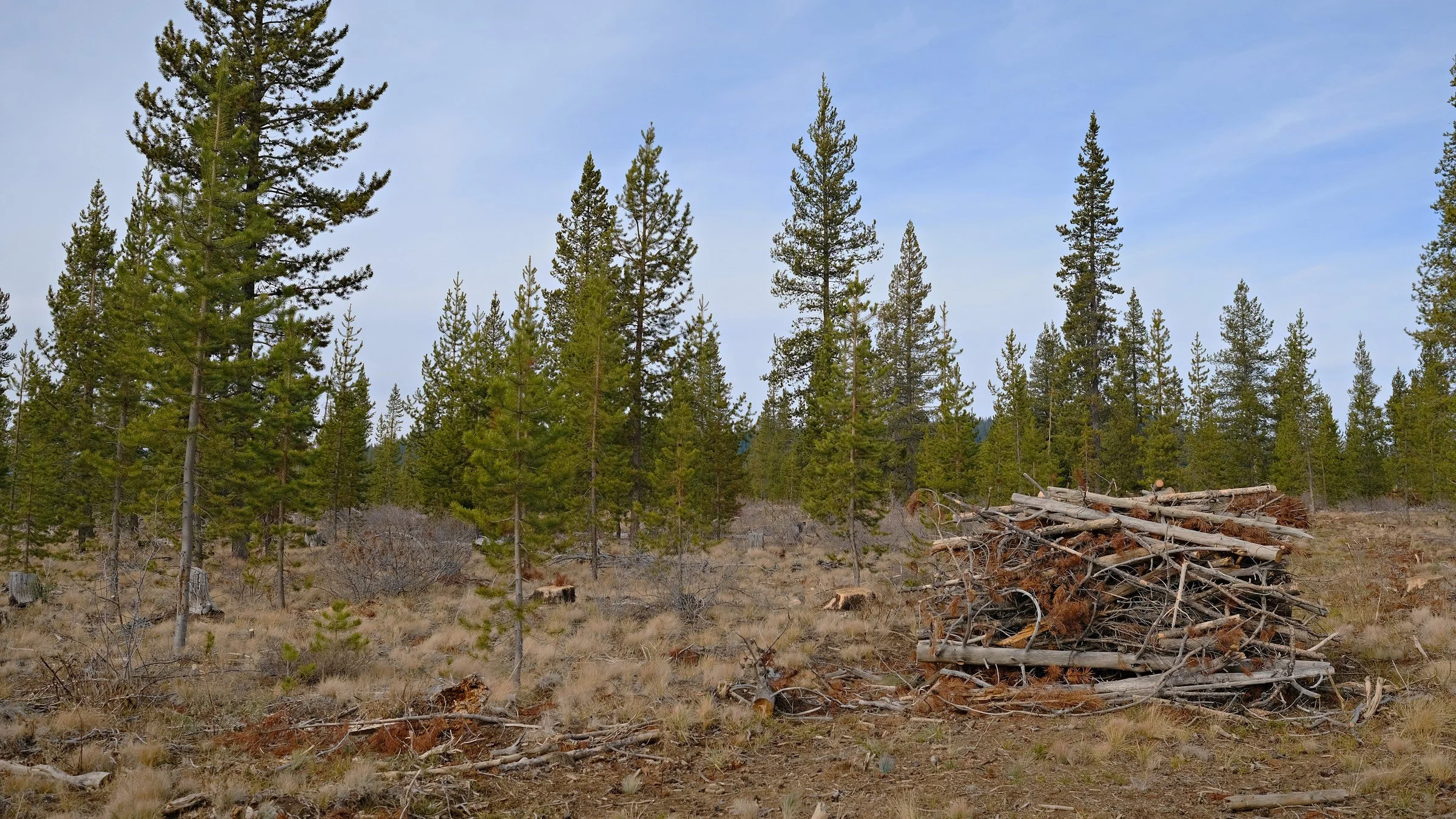
Wood residuals from forest management on the Deschutes National Forest, often piled and burned in the wildland-urban interface, now have the potential to be diverted to heat buildings and snowmelt at Mt. Bachelor’s West Village. The result is multiple benefits at once: improved air quality through a reduction in open pile burning, and reduced greenhouse gas emissions from propane heating at the ski resort. Photo: Wisewood Energy
The boiler is fueled by wood chips from Forest Service–approved restoration and wildfire mitigation projects on the Deschutes National Forest. Ongoing fuels treatment and forest management activities produce small-diameter, low-value material that is typically piled and burned in place during the wet season. Material bound for the facility is gathered at a local wood yard and chipped before it is hauled up the mountain, giving forest restoration a modest, local market for its residue. The facility will use about 1,500 tons of chips a year as delivered, rising to about 2,000 tons once all planned loads are connected. Regional supply studies estimate that more than 100 times that amount is available each year across Central Oregon.
“Mt. Bachelor’s wood energy facility demonstrates how modern wood energy technology, common in other parts of the world, has a real place in mountain communities in the U.S. and beyond. Every ton of chips does several jobs at once, supporting the forest work that reduces wildfire risk, replacing propane and its emissions, and giving the resort a local fuel with steadier costs than the propane market. We’re proud to have built this with Mt. Bachelor, and we hope to see other ski resorts in the Mountain West follow closely behind.”
Fuel infeed, combustion control and ash removal are automated, and an electrostatic precipitator captures particulate before the stack, so in normal operation there is little to no visible smoke or odor; on cold days, the plume is mostly water vapor. Mt. Bachelor staff monitor the plant remotely and check it on site daily, and newer propane boilers installed alongside the wood chip boiler provide backup heat.
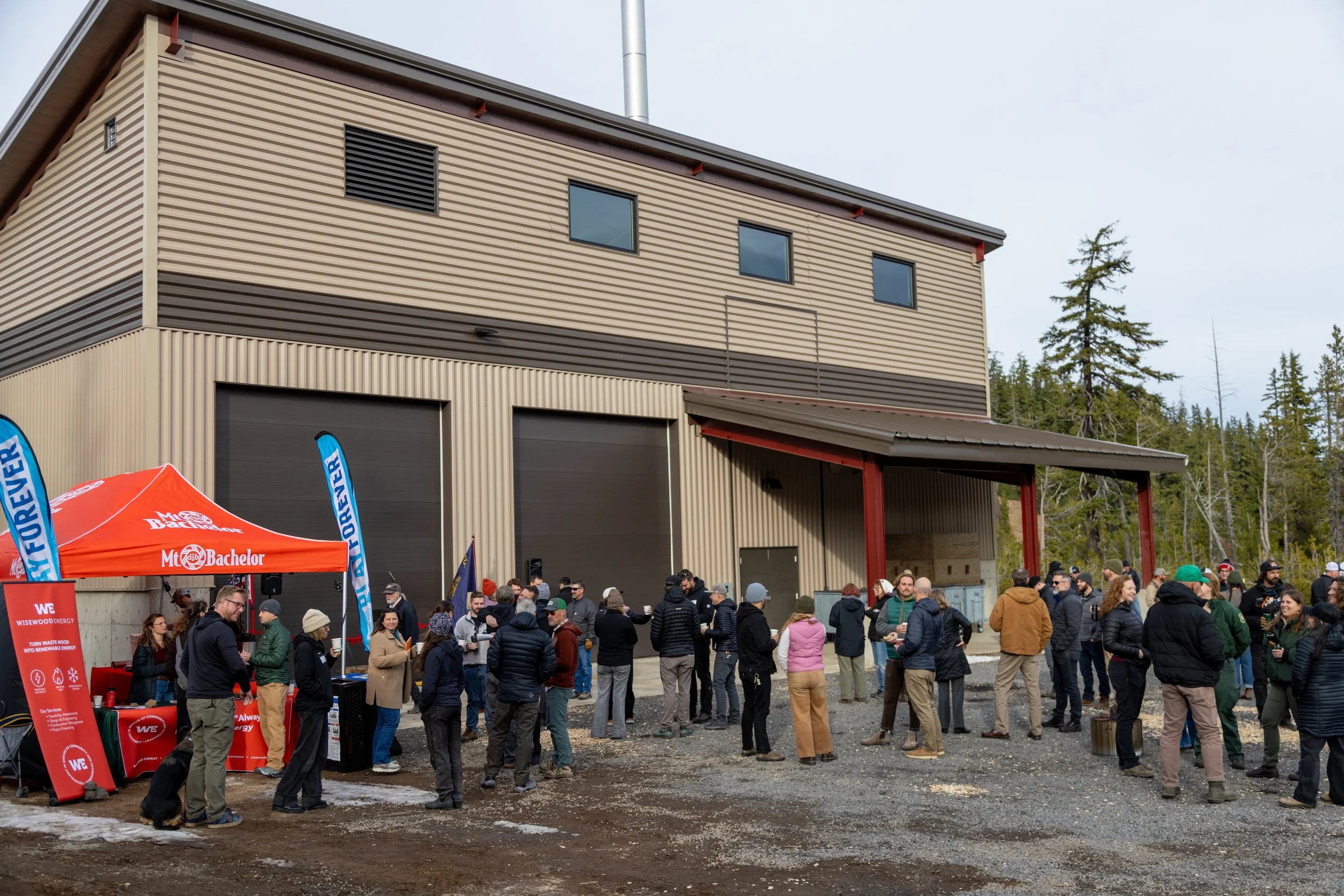
Guests gathered outside the Wood Fuel Energy Facility at Mt. Bachelor’s West Village base area. Photo: Mt. Bachelor
The system connects Ski Patrol, West Village Lodge, Mountain Gateway, Todd Lake and the Bachelor Butte Administration Building, along with snowmelt for the West Village base area. Snowmelt and space heating are running now, and Mt. Bachelor plans to bring more space heating onto the system at Mountain Gateway, West Village Lodge and the Administration Building over the next two seasons.
Wisewood Energy designed and engineered the system and managed construction and commissioning, working with Kirby Nagelhout Construction Company, Apollo Mechanical Contractors and boiler manufacturer Kohlbach. The project was made possible by POWDR, Mt. Bachelor’s parent company, with support from the U.S. Forest Service, the Oregon Department of Energy and Deschutes County.
More about the facility is on Mt. Bachelor’s blog.
About Wisewood Energy
Wisewood Energy designs and builds wood energy systems — heat and combined heat and power (CHP) — for facilities in the rural western U.S., sized for the actual load and fueled by wood residuals from nearby forests and mills. The company works with ski resorts, schools, hospitals, mills and communities from feasibility through design-build, commissioning and long-term operations support. Contact info@wisewoodenergy.com.
Running a mountain facility on propane? Let’s talk about your heat load and fuel supply, and if biomass energy is right for you.